
The Lean Shop Floor Yellow Belt Series are designed and developed in a very simple way so that the shop floor staff with little or no formal education can understand. When a staff member completes all the 8 modules he / she can be awarded a certificate.

There are 8 modules namely:
1. Apply Lean Practices
2. Apply 5S Pinnciples
3. Undertake Root Cause Analysis
4. Apply Cost Factors
5. Apply Quick Changeovers
6. Apply JIT Principles
7. Apply TPM Principles
8. Sustain Process Improvements
This module Sustaining Process Improvements covers the following topics:
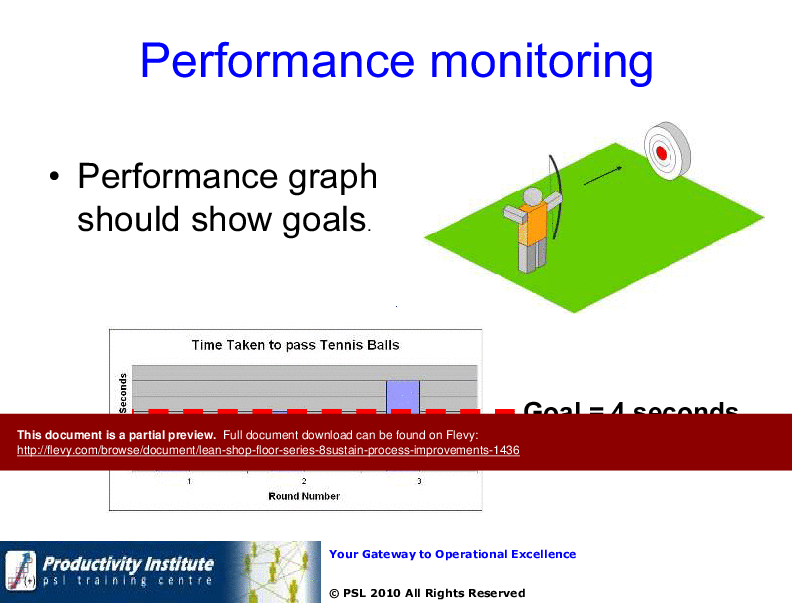
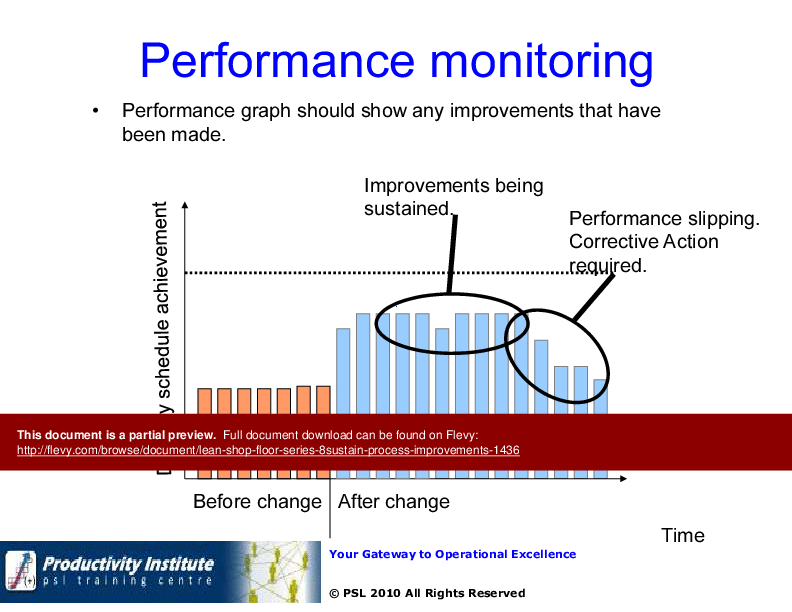
Performance monitoring
Graphing performance
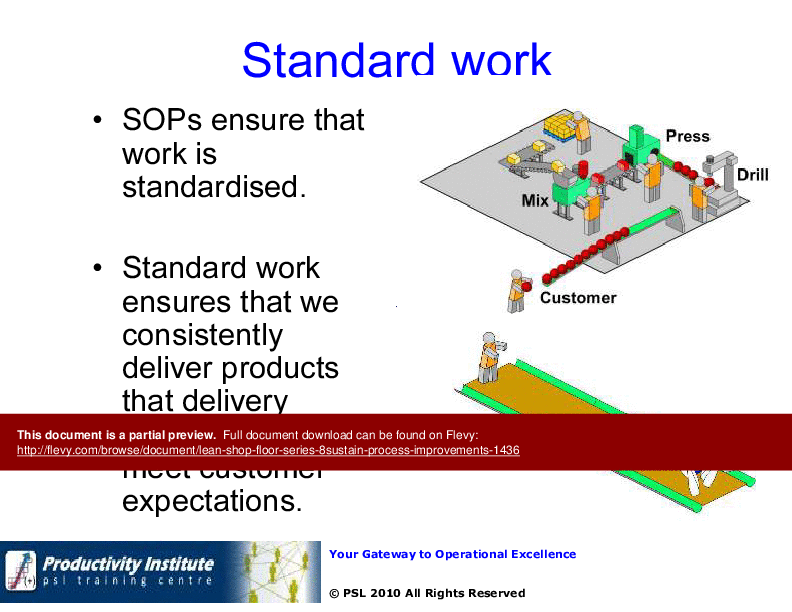
Standard work
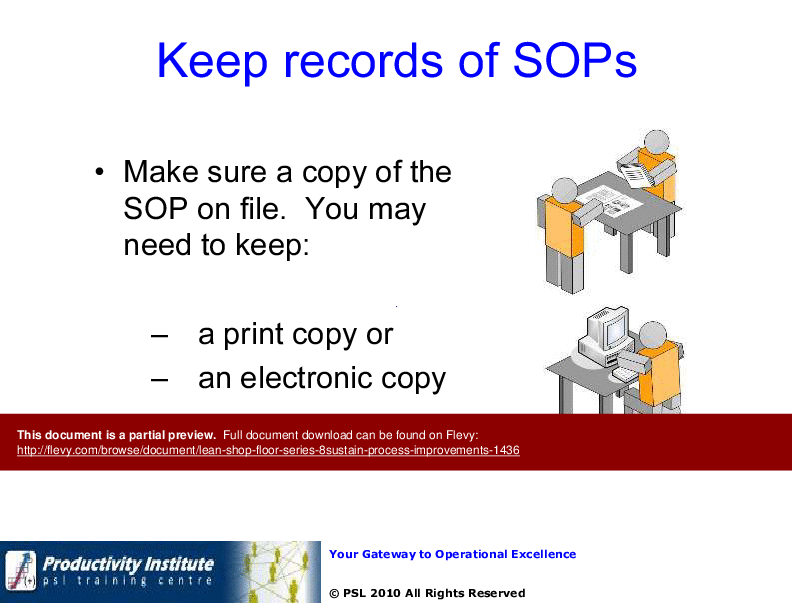
Following SOPs
Being self motivated
Effective Communication
*Total number of slides = 46
You can also buy all the 8 modules at a discounted price. Pl look for "Shop Floor Series – All in 1"
Got a question about the product? Email us at support@flevy.com or ask the author directly by using the "Ask the Author a Question" form. If you cannot view the preview above this document description, go here to view the large preview instead.
Executive Summary
The "Lean Shop Floor YB Series - 8. Sustain Process Improvements" presentation is a comprehensive training resource designed to empower organizations in maintaining and enhancing process improvements. Developed by a certified LSS Master Black Belt with extensive global training experience, this presentation focuses on critical aspects such as performance monitoring, standard operating procedures (SOPs), and effective communication strategies. By utilizing this resource, teams will learn to establish measurable goals, implement performance indicators, and sustain improvements through structured methodologies.
Who This Is For and When to Use
• Operations managers seeking to enhance process efficiency
• Quality assurance teams focused on maintaining standards
• Lean practitioners aiming to embed continuous improvement culture
• Training coordinators responsible for staff development
Best-fit moments to use this deck:
• During training sessions for new employees on Lean methodologies
• When implementing new process improvements in manufacturing settings
• In workshops aimed at reinforcing the importance of performance monitoring
Learning Objectives
• Define performance monitoring and its significance in operational excellence
• Establish SMART goals to guide process improvements
• Implement key performance indicators (KPIs) for effective tracking
• Develop and utilize standard operating procedures (SOPs)
• Foster a culture of self-motivation and effective communication among team members
• Sustain improvements through ongoing performance assessment and corrective actions
Table of Contents
• Introduction to Performance Monitoring (page 3)
• Setting SMART Goals (page 5)
• Key Performance Indicators (KPIs) (page 7)
• Benefits of Standard Operating Procedures (SOPs) (page 10)
• Effective Communication Strategies (page 15)
• Sustaining Continuous Improvement (page 20)
Primary Topics Covered
• Performance Monitoring - The systematic recording of data to assess the effectiveness of operations and ensure targets are met.
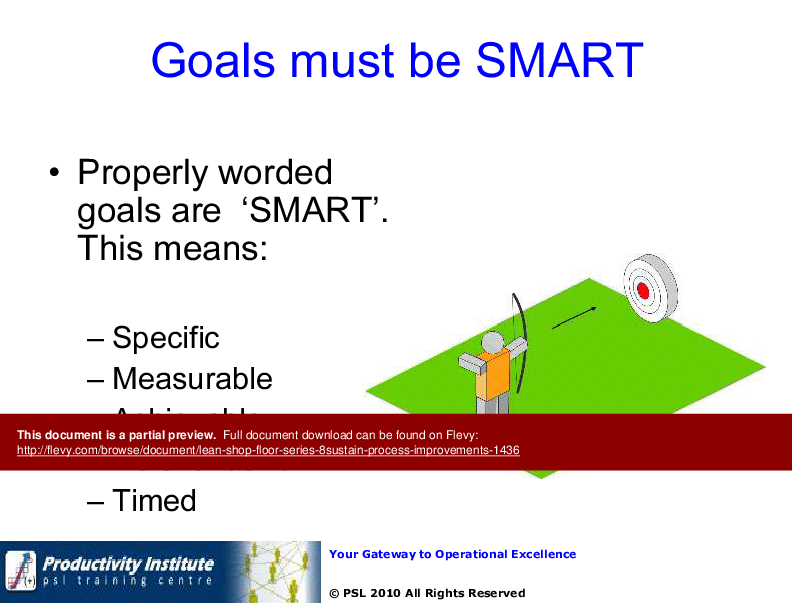
• SMART Goals - A framework for setting goals that are Specific, Measurable, Achievable, Relevant, and Timed, ensuring clarity and focus.
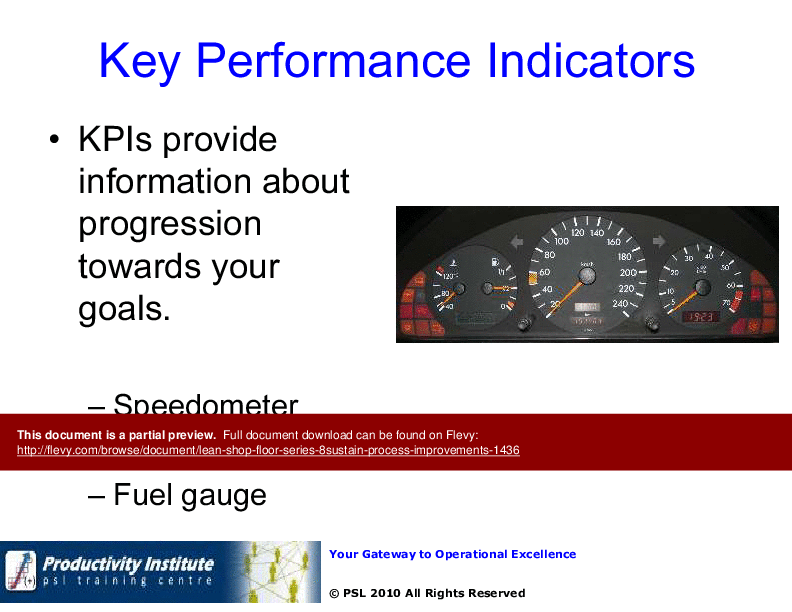
• Key Performance Indicators (KPIs) - Metrics that provide insights into progress towards goals, aiding in performance tracking and decision-making.
• Standard Operating Procedures (SOPs) - Documents that outline the best methods for performing tasks, ensuring consistency and quality in operations.
• Self-Motivation - The importance of individual ownership in sustaining improvements and maintaining standards.
• Effective Communication - Strategies for fostering open dialogue among team members to enhance project sustainability and resolve issues.
Deliverables, Templates, and Tools
• Performance monitoring templates for tracking key metrics
• SMART goals framework for setting clear objectives
• SOP templates for standardizing processes
• Communication plans to enhance team engagement
• Action lists for ongoing improvement tracking
• Visual control tools like Andons for immediate problem reporting
Slide Highlights
• Overview of performance monitoring and its impact on operational effectiveness
• Examples of SMART goals with clear metrics and timelines
• Visual representation of KPIs and their relevance in tracking progress
• Benefits of implementing SOPs to ensure consistent quality
• Strategies for fostering self-motivation and effective communication in teams
Potential Workshop Agenda
Introduction to Performance Monitoring (30 minutes)
• Discuss the importance of performance monitoring
• Review examples of effective monitoring practices
Setting SMART Goals (45 minutes)
• Workshop on creating SMART goals for specific projects
• Group activity to share and refine goals
Implementing SOPs (60 minutes)
• Overview of SOP development and benefits
• Hands-on session to draft SOPs for key processes
Effective Communication Strategies (30 minutes)
• Discuss the role of communication in sustaining improvements
• Role-playing scenarios to practice effective communication
Customization Guidance
• Tailor performance monitoring templates to reflect specific operational metrics relevant to your organization
• Adjust SOPs to align with unique processes and safety standards in your environment
• Incorporate company-specific terminology and examples in training materials
Secondary Topics Covered
• The role of visual controls in sustaining improvements
• Techniques for effective shift handovers to ensure continuity
• Methods for engaging team members in improvement initiatives
• Importance of documenting and sharing project outcomes
FAQ
What is performance monitoring?
Performance monitoring involves systematically recording data to evaluate the effectiveness of operations and ensure that targets are met.
How do I set SMART goals?
SMART goals should be Specific, Measurable, Achievable, Relevant, and Timed, providing clear direction and accountability.
What are KPIs?
Key Performance Indicators are metrics that help track progress towards goals and assess the effectiveness of processes.
Why are SOPs important?
Standard Operating Procedures ensure that tasks are performed consistently and safely, maintaining quality and efficiency in operations.
How can I motivate my team?
Encourage involvement in decision-making and project preparation, and ensure team members understand the reasons behind process changes.
What strategies enhance effective communication?
Utilize regular updates, encourage open dialogue, and ensure everyone understands their roles and responsibilities in sustaining improvements.
How can I sustain improvements over time?
Regularly monitor performance, reinforce standards through SOPs, and maintain effective communication to address issues promptly.
What role do visual controls play?
Visual controls, such as Andons, provide immediate feedback on performance and alert staff to any issues that require attention.
How should I document shift handovers?
Clear and concise shift handovers should include updates on projects and production to ensure continuity and accountability.
Glossary
• Performance Monitoring - The systematic tracking of operational data to assess effectiveness.
• SMART Goals - Goals that are Specific, Measurable, Achievable, Relevant, and Timed.
• Key Performance Indicators (KPIs) - Metrics used to measure progress towards objectives.
• Standard Operating Procedures (SOPs) - Documents outlining the best methods for performing tasks.
• Self-Motivation - The drive to take ownership of one’s work and responsibilities.
• Effective Communication - Open and clear dialogue among team members to enhance collaboration.
• Visual Controls - Tools used to provide immediate feedback on performance and issues.
• Action Lists - Lists that outline tasks and responsibilities for ongoing improvement.
• Continuous Improvement - Ongoing efforts to enhance processes and outcomes.
• Training Session - A structured opportunity for learning and skill development.
• Engagement - The involvement and commitment of team members in projects.
• Shift Handover - The process of transferring information between shifts to ensure continuity.
• Feedback Loop - A process for receiving and responding to performance data.
• Documentation - The act of recording information for future reference and accountability.
• Project Outcomes - The results and impacts of completed projects.
• Team Dynamics - The interactions and relationships among team members.
• Problem Solving - The process of identifying and addressing issues effectively.
• Training Materials - Resources used to facilitate learning and development.
• Engagement Strategies - Techniques used to involve team members in improvement initiatives.
• Process Improvement - The act of enhancing existing processes for better efficiency and quality.
• Operational Excellence - A philosophy of continuous improvement and high performance in operations.
Source: Best Practices in Process Improvement PowerPoint Slides: Lean Shop Floor YB Series - 8. Sustain Process Improvements PowerPoint (PPT) Presentation Slide Deck, OpEx Academy NZ
This document is available as part of the following discounted bundle(s):
Save %!
Lean Shop Floor / Yellow Belt Training Series - 8 Modules
This bundle contains 8 total documents. See all the documents to the right.
|
Receive our FREE presentation on Operational Excellence
This 50-slide presentation provides a high-level introduction to the 4 Building Blocks of Operational Excellence. Achieving OpEx requires the implementation of a Business Execution System that integrates these 4 building blocks. |